
CEAM Science
THE RESEARCH DIVISION OF THE CENTRE FOR ELECTROACOUSTIC MUSIC
Research ↷
CEAM Science is one of the divisions of the Centre for Electroacoustic Music. It covers research in programming for electroacoustic composition, such as the development of our own CEAMMC PureData library. The Centre also hosts an annual international academic conference and publishes research articles and book translations.
Another division of the Centre for Electroacoustic Music is the archive, which holds materials on the history of Soviet acoustics, the work of the Theremin Centre and the SoundArtist community.
Research Pages ↷
CEAM Archive ↷
ABOUT THE ARCHIVE
CEAM.Archive is a division of the Research and Creative Centre for Electroacoustic Music, established in May 2024. Its collection spans more than a century of inventions and research in music and technology: sound synthesis, musical acoustics, sound recording, the study of instruments and the human voice, music perception, electronic musical instruments, light music, cybernetics and machine learning.
ARCHIVE MATERIALS
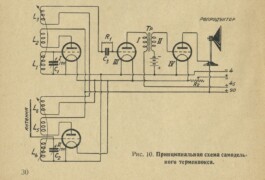
The earliest materials in the Archive are research manuscripts of the State Institute for Musical Science (GIMN, 1921−1931). From the early 1930s, the collection includes documents and artefacts of various organisations, students and staff of the Moscow Conservatory. The collection continues to grow today: the Archive holds original art objects and digital recordings of concerts, conferences, lectures and performances of electroacoustic and multimedia works — projects created by CEAM in recent years.
The core of the collection consists of the work of the Acoustic Laboratory of the Moscow Conservatory. It was founded in 1932 by the outstanding musicologist and acoustics specialist Nikolai Alexandrovich Garbuzov (1880−1955). Over the years, its staff included the engineers and inventors of electronic musical instruments L. S. Theremin and A. A. Volodin, the polyphony theorist and physicist S. S. Skrebkov, the piano tuner and theorist of piano performance G. K. Bogino, the singing voice researcher E. A. Rudakov, the acoustician P. N. Zimin, the musicologists working on music perception E. V. Nazaikinsky, Yu. N. Rags and V. V. Medushevsky, the musicologist and psychologist M. P. Papush, and others.
Among the Archive’s unique materials are printed abstracts, transcripts of talks and tape recordings of the “Acoustic Environments” seminar (1963–1987). Besides the Laboratory staff, it brought together leading Soviet scientists, including the engineer and inventor of the ANS synthesizer E. A. Murzin, the mathematician and specialist in the psychology of creativity R. Kh. Zaripov, the mathematician and machine learning pioneer V. N. Vapnik, the specialist in acoustic and perceptual phonetics L. V. Zlatoustova, the light music theorist and head of the Prometheus bureau in Kazan B. M. Galeyev, the mathematician and computer music researcher A. S. Tangian, the pianist and theorist P. N. Meshchaninov, and the sound engineer P. N. Kondrashin. Conservatory professors who spoke at “Acoustic Environments” included Yu. N. Kholopov, I. A. Barsova, A. S. Sokolov, E. A. Vasina-Grossman and others.
The main materials of the 1990s relate to the Theremin Centre, which operated at the Conservatory from 1992 to 2012. The project was led by the researcher, engineer, artist and curator A. I. Smirnov. The most recent part of the collection comprises objects, including digital ones, from the SoundArtist.ru community (from 2011 to the present) and documents of the Centre for Electroacoustic Music, founded in 2006.

WORKING WITH THE ARCHIVE
Working with the archive matters not only for preserving historically and artistically valuable materials, but also for tracing connections between processes that took place in the past and continue today. A significant part of the collection consists of drafts, calculations and sketches — knowledge not in a finished form (textbooks, dissertations and books), but materials that reveal the process of searching for the truth. Hypotheses, pencil notes, transcripts of discussions with colleagues and device drawings — together they form a cast of the present at different moments in time. In this sense, we are archiving the present.
By engaging with the Archive, researchers and anyone interested in electroacoustics will be able to see how musical practice has changed and how some phenomena have been reborn as others. It is a thread that connects different people and sets the direction of movement in the present.

About Miller Puckette’s book “The Theory and Technique of Electronic Music” ↷
This is the first book to cover both the theory and the practice of synthesizing musical sounds with computers. Each chapter begins with a theoretical description of a specific technique or problem area and ends with a series of working examples (more than 100 in total) covering a wide range of topics.
The book takes a unified approach: in the second chapter, for example, both sampling and wavetable synthesis are treated as special cases of a single basic technique. Although the theory is covered in depth, the mathematics used goes no further than trigonometry and complex numbers. The examples and software, as well as a machine-readable version of the text, are available online and supported by a large online community.
“The Theory and Technique of Electronic Music” is valuable both as a textbook and as professional reading for electronic musicians and computer music researchers.
The book was translated by a group of authors:
Grigory Amosov
Igor Kefalidi
Alexey Nadzharov
Sergey Poltavsky
* The translation may be revised
CEAM Science
THE RESEARCH DIVISION OF THE CENTRE FOR ELECTROACOUSTIC MUSIC
Research ↷
CEAM Science is one of the divisions of the Centre for Electroacoustic Music. It covers research in programming for electroacoustic composition, such as the development of our own CEAMMC PureData library. The Centre also hosts an annual international academic conference and publishes research articles and book translations.
Another division of the Centre for Electroacoustic Music is the archive, which holds materials on the history of Soviet acoustics, the work of the Theremin Centre and the SoundArtist community.
Research Pages ↷
CEAM Archive ↷
ABOUT THE ARCHIVE
CEAM.Archive is a division of the Research and Creative Centre for Electroacoustic Music, established in May 2024. Its collection spans more than a century of inventions and research in music and technology: sound synthesis, musical acoustics, sound recording, the study of instruments and the human voice, music perception, electronic musical instruments, light music, cybernetics and machine learning.
ARCHIVE MATERIALS
The earliest materials in the Archive are research manuscripts of the State Institute for Musical Science (GIMN, 1921−1931). From the early 1930s, the collection includes documents and artefacts of various organisations, students and staff of the Moscow Conservatory. The collection continues to grow today: the Archive holds original art objects and digital recordings of concerts, conferences, lectures and performances of electroacoustic and multimedia works — projects created by CEAM in recent years.
The core of the collection consists of the work of the Acoustic Laboratory of the Moscow Conservatory. It was founded in 1932 by the outstanding musicologist and acoustics specialist Nikolai Alexandrovich Garbuzov (1880−1955). Over the years, its staff included the engineers and inventors of electronic musical instruments L. S. Theremin and A. A. Volodin, the polyphony theorist and physicist S. S. Skrebkov, the piano tuner and theorist of piano performance G. K. Bogino, the singing voice researcher E. A. Rudakov, the acoustician P. N. Zimin, the musicologists working on music perception E. V. Nazaikinsky, Yu. N. Rags and V. V. Medushevsky, the musicologist and psychologist M. P. Papush, and others.
Among the Archive’s unique materials are printed abstracts, transcripts of talks and tape recordings of the “Acoustic Environments” seminar (1963–1987). Besides the Laboratory staff, it brought together leading Soviet scientists, including the engineer and inventor of the ANS synthesizer E. A. Murzin, the mathematician and specialist in the psychology of creativity R. Kh. Zaripov, the mathematician and machine learning pioneer V. N. Vapnik, the specialist in acoustic and perceptual phonetics L. V. Zlatoustova, the light music theorist and head of the Prometheus bureau in Kazan B. M. Galeyev, the mathematician and computer music researcher A. S. Tangian, the pianist and theorist P. N. Meshchaninov, and the sound engineer P. N. Kondrashin. Conservatory professors who spoke at “Acoustic Environments” included Yu. N. Kholopov, I. A. Barsova, A. S. Sokolov, E. A. Vasina-Grossman and others.
The main materials of the 1990s relate to the Theremin Centre, which operated at the Conservatory from 1992 to 2012. The project was led by the researcher, engineer, artist and curator A. I. Smirnov. The most recent part of the collection comprises objects, including digital ones, from the SoundArtist.ru community (from 2011 to the present) and documents of the Centre for Electroacoustic Music, founded in 2006.
WORKING WITH THE ARCHIVE
Working with the archive matters not only for preserving historically and artistically valuable materials, but also for tracing connections between processes that took place in the past and continue today. A significant part of the collection consists of drafts, calculations and sketches — knowledge not in a finished form (textbooks, dissertations and books), but materials that reveal the process of searching for the truth. Hypotheses, pencil notes, transcripts of discussions with colleagues and device drawings — together they form a cast of the present at different moments in time. In this sense, we are archiving the present.
By engaging with the Archive, researchers and anyone interested in electroacoustics will be able to see how musical practice has changed and how some phenomena have been reborn as others. It is a thread that connects different people and sets the direction of movement in the present.
About Miller Puckette’s book “The Theory and Technique of Electronic Music” ↷
This is the first book to cover both the theory and the practice of synthesizing musical sounds with computers. Each chapter begins with a theoretical description of a specific technique or problem area and ends with a series of working examples (more than 100 in total) covering a wide range of topics.
The book takes a unified approach: in the second chapter, for example, both sampling and wavetable synthesis are treated as special cases of a single basic technique. Although the theory is covered in depth, the mathematics used goes no further than trigonometry and complex numbers. The examples and software, as well as a machine-readable version of the text, are available online and supported by a large online community.
“The Theory and Technique of Electronic Music” is valuable both as a textbook and as professional reading for electronic musicians and computer music researchers.
The book was translated by a group of authors:
Grigory Amosov
Igor Kefalidi
Alexey Nadzharov
Sergey Poltavsky
* The translation may be revised

13/6 Bolshaya Nikitskaya ulitsa
Ground floor of The Great Hall, service entrance
ceammc@mosconsv.ru

Artemyev Art Space
13 Bolshaya Nikitskaya ulitsa
13/6 Bolshaya Nikitskaya ulitsa
Ground floor of The Great Hall, service entrance
ceammc@mosconsv.ru
Artemyev Art Space
13 Bolshaya Nikitskaya ulitsa